Introduction
Graphics-style tattoos — including blackwork, line art, geometric, dotwork and stippling — rely on crisp lines, contrast and controlled shading. This guide walks you through the *full life cycle* of a graphics tattoo in Omsk: how to choose a safe studio, application techniques, practical aftercare (including local climate tips), correction and removal options, and realistic expectations.
1. Before You Get Inked: Safety & Preparation
— Choose a licensed, reputable studio:
— Verify compliance with local sanitary standards and Rospotrebnadzor recommendations.
— Look for single-use needles, sealed ink caps, autoclave sterilization for reusable tools, and posted hygiene protocols.
— Review an artist’s portfolio for crisp lines and healed-work photos (not just fresh photos).
— Health & legal considerations:
— Sign written consent; get a clear aftercare sheet.
— Avoid if you have active skin infections, uncontrolled diabetes, certain autoimmune diseases, or severe keloid tendencies — consult a doctor.
— Defer tattoos during pregnancy and breastfeeding.
— Inform the artist about medications (anticoagulants, isotretinoin) and allergies.
— Pre-session preparation:
— Sleep well, hydrate, avoid alcohol and blood-thinning medications 24–48 hours prior (check with your physician).
— Shave the area if requested (or let the studio handle it).
— Bring photo ID and any medical notes.
2. Application Techniques for Graphics Tattoos
— Design transfer and stencil:
— Artist creates a precise stencil; check placement and size on your body before work begins.
— Equipment & needles:
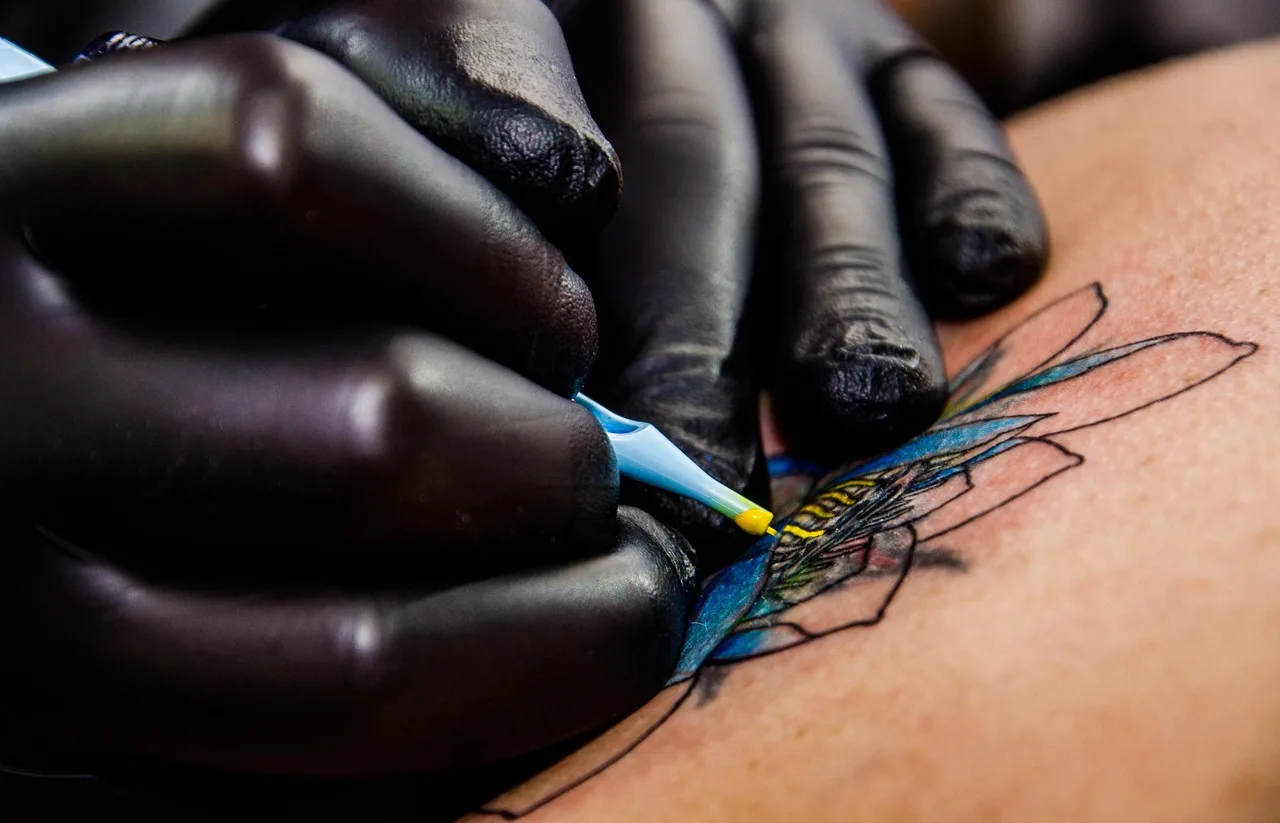
— Many artists prefer rotary machines for smooth lines and fine detail; coil machines are also used.
— For graphic work: single-needle or tight round liners for fine lines; small magnums/curved magnums for controlled shading and stippling.
— Skin preparation:
— Skin is cleansed with a suitable antiseptic (povidone-iodine or chlorhexidine solution where appropriate) and shaved if needed.
— The artist will stretch the skin to ensure consistent depth and crisp lines.
— Ink choice:
— Use reputable inks with clear ingredient lists (CE/ISO markings where possible). Black carbon-based inks are common and respond well to laser removal if ever needed.
— Technique and depth:
— Proper needle depth targets the papillary dermis. Too shallow = poor retention, too deep = blowouts/scarring.
— For crisp graphics, controlled speed, consistent hand pressure and clean linework are essential.
— Pain management:
— Topical anesthetics can be used but may affect line visibility for the artist. Discuss options in advance.
3. Immediate Aftercare (First 48 Hours)
— Typical studio protocol:
— Artist wipes excess ink/blood and applies a breathable dressing or film.
— Follow studio instructions: keep the dressing on for the recommended time (often 2–24 hours).
— First 48-hour routine:
— Wash hands thoroughly before touching the tattoo.
— Gently wash with mild, fragrance-free soap and lukewarm water; pat dry with a clean towel.
— Apply a thin layer of recommended aftercare ointment or balm (usually provided/approved by the studio). Avoid petroleum-heavy layers that suffocate skin unless specifically advised.
— Wear loose clothing; avoid rubbing and pressure.
4. Ongoing Healing (Days 3–30)
— Expected stages:
— Days 3–7: scabbing and peeling begin. Do not pick or peel scabs.
— Weeks 2–4: itchiness, flaking and light fading as skin regenerates.
— Up to 6 months: color and lines settle and mature.
— What to avoid:
— No swimming (pools, hot tubs) or extended soaking for at least 2–3 weeks.
— No saunas, baths or banyas during active healing — important in Russian banya culture: wait until fully healed.
— Avoid prolonged sun exposure; UV causes fading and may complicate healing.
— No heavy exercise causing excessive friction or sweat on the area for the first week or until advised.
— Moisturize:
— Use a fragrance-free moisturizing balm multiple times daily as the tattoo peels.
— When to contact a professional:
— Signs of infection: increasing pain, spreading redness, unusual discharge, fever — seek medical care.
5. Long-Term Care (After Healing)
— Sun protection:
— Use high-SPF sunscreen on fresh and healed tattoos to preserve contrast and linework.
— Skin health:
— Keep skin moisturized regularly to maintain crisp appearance.
— Avoid prolonged friction (tight clothing) over detailed areas.
— Touch-ups:
— Most artists recommend a touch-up at 6–12 weeks to perfect settled lines and fill any loss of pigment.
6. Corrections & Touch-ups
— Timing:
— Wait until the tattoo is fully healed (typically 8–12 weeks) before planning touch-ups.
— Common corrections:
— Line thickening or refinement