Introduction
Graphics-style tattoos—characterized by bold lines, geometric forms, high-contrast blackwork, dotwork and illustrative motifs—are striking and long-lasting when done and cared for properly. This article walks through the full life cycle of a graphics tattoo: planning and safety, application principles, aftercare in Omsk’s climate, correction options, and removal choices. It is written for clients and enthusiasts; always entrust actual tattooing to licensed professionals.
1. Planning and design
— Define your concept: subject, scale, negative space and placement. Graphics tattoos rely on contrast and composition, so sketching several sizes helps.
— Match style to anatomy: curved areas (shoulder, calf) affect line flow; flat planes (forearm, thigh) suit large graphics.
— Choose a reputable artist: portfolio should show crisp linework, consistent fills and healed photos (not just fresh work).
— Expect a consultation: discuss allergies, scarring history, medications, and realistic expectations about aging and fading.
2. Safety and legal considerations in Omsk
— Age and ID: most studios in Omsk require clients to be 18+ and to present ID.
— Licensing & sanitary control: check for visible sterilization routines and certificates. In Russia, clinics and studios follow sanitary standards overseen locally by Rospotrebnadzor — ask the studio about their compliance.
— Clean environment: treatment room should be clean, with single-use needles, sealed ink caps, gloves and a fresh barrier film on equipment.
— Health disclosures: disclose medical conditions, blood thinners, pregnancy, diabetes or immune issues; a physician’s clearance may be required.
3. Materials and equipment (high-level)
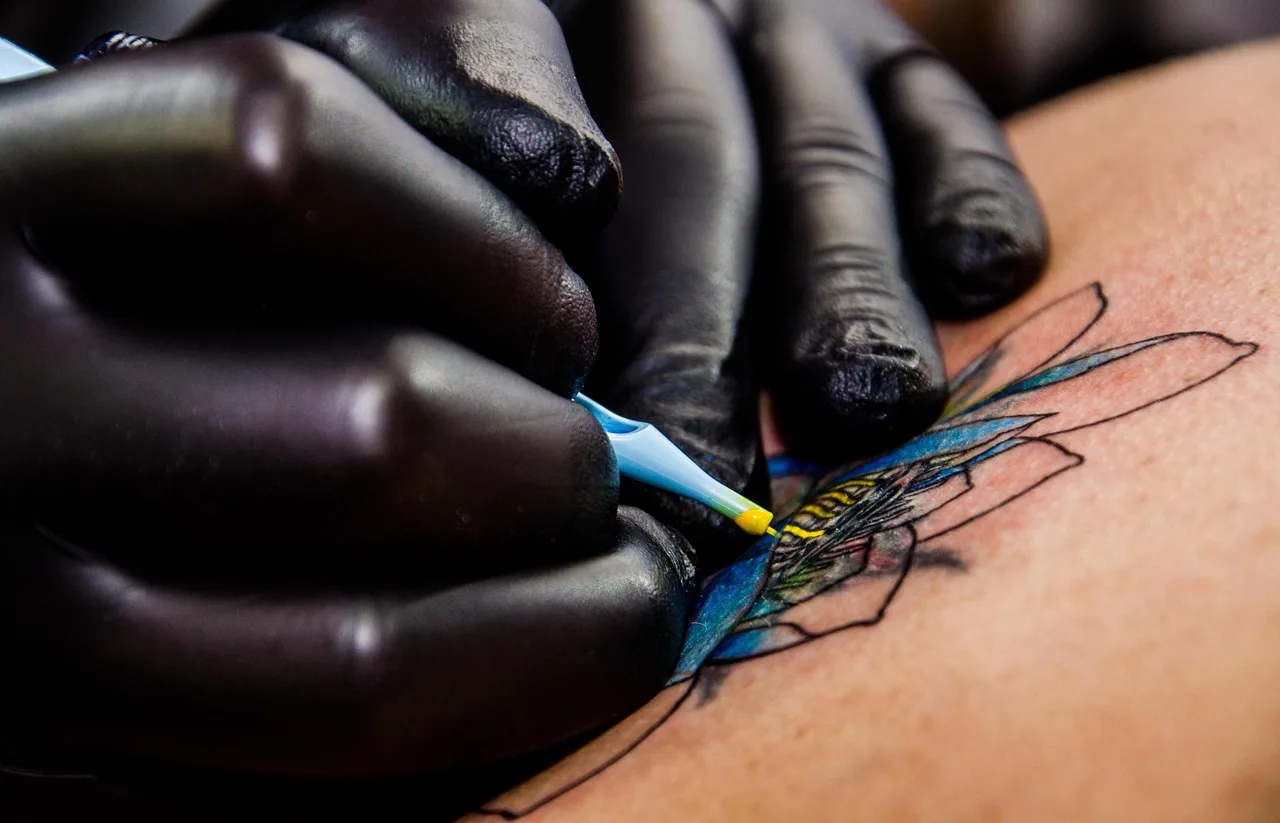
— Needles & machines: artists select needle groupings and either coil or rotary machines to achieve crisp lines and smooth fills. This is technical — no need to perform yourself.
— Inks: quality, pigment-stable inks are essential. Ask the artist about pigment brands and vegan/sterile options if you have concerns.
— Sterilization: autoclave-processed reusable tools (if any) and sealed single-use items are industry standard.
— Patch test: for clients with sensitive skin or unknown reactions, request a small patch test.
4. Application techniques for graphics tattoos (overview)
— Stenciling: accurate placement via stencil is critical. Artists transfer and refine the stencil before starting.
— Linework: firm hand pressure and consistent speed produce clean, stable lines. Thicker outlines enhance longevity.
— Blackwork & fills: layering and controlled saturation create even blacks without over-traumatizing the skin.
— Dotwork & stippling: build gradients and texture using controlled dot density.
— Negative space: leaving skin uninked is a design element—plan for how it will age.
— Session planning: larger pieces are broken into sessions to allow skin recovery and to prevent overworking.
Note: These are high-level descriptions. Do not attempt to tattoo yourself—procedural skill and sterile technique are necessary.
5. Immediate and short-term aftercare
— Follow artist instructions precisely; they know their technique and materials.
— Typical immediate steps:
— Keep bandage on for the period instructed (often a few hours to 24 hours depending on method).
— Wash gently with mild, fragrance-free soap and lukewarm water; pat dry with a clean towel.
— Apply a thin layer of recommended ointment or cream (artist-specified) for the first days, then switch to a lighter moisturizer as scabs form.
— Avoid:
— Picking or scratching scabs.
— Submerging in baths, pools, saunas for 2–3 weeks.
— Direct sun exposure and tanning beds while healing.
— Signs to monitor: excessive swelling, spreading redness, pus, fever or severe pain — consult a dermatologist or clinic if these occur.
6. Long-term care and preservation
— Sun protection: use a high-SPF sunscreen on healed tattoos to slow fading. Omsk has strong UV in summer; protect exposed pieces.
— Moisturize: regular skin hydration preserves pigment and prevents premature breakdown.
— Touch-ups: expect minor touch-ups after initial healing (commonly 2–6 months) to correct areas with poor uptake.
— Aging considerations: heavy blackwork often ages better than fine lines; plan designs with longevity in mind.
7. Correction and cover-ups
— Timing: wait until tattoos are fully healed (usually 3–6 months) before significant corrections or cover-ups.
— Touch-up: minor gaps and uneven fills are commonly corrected by the original artist.
— Cover-up: for unwanted graphics, skilled artists can design overlays using darker pigments and complementary shapes; successful cover-ups depend on size, color saturation and skin tone.
— Camouflage/lightening: sometimes selective fading (laser or saline) before cover-up improves results—consult both artist and removal specialist.
8. Removal options (pros, cons and what to expect)
— Laser removal (Q-switched or picosecond lasers)
— Most effective for black and some colors.
— Multiple sessions spaced months apart; number depends on pigment depth, color and skin type.
— Risks: hypopigmentation, hyperpigmentation, scarring; more caution on darker skin tones.
— Surgical excision
— Best for small tattoos; immediate removal by cutting and suturing.
— Leaves a scar and requires recovery.
— Dermabrasion / Saline or chemical methods
— Less predictable; risk of scarring and uneven results. Saline tattoo removal by professionals can lighten pigments for cover-ups.
— Choosing a removal clinic in Omsk
— Look for licensed dermatology or laser clinics with experience in tattoo removal, ask about laser type and before/after photos, and request a consultation.
— Pre- and post-treatment care: follow clinician guidance strictly; skin needs protection and monitoring for complications.
9. Complications to be aware of
— Allergic reactions: some pigments cause delayed hypersensitivity—see a dermatologist if you experience itching, raised bumps or persistent redness.
— Infections: bacterial infection requires prompt medical care and possibly antibiotics.
— Keloids and hypertrophic scars: history of scarring should be disclosed; some people are poor candidates for tattooing.
— Pigment migration and